
About
Gallery
Midis
Links
Site Map
Internet Explorer
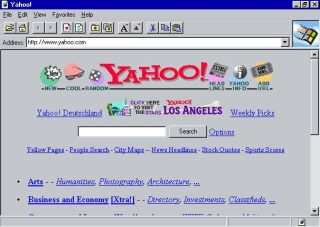
Internet Explorer 1 debuted on August 16, 1995. It was included with the Internet Jumpstart Kit in Microsoft Plus! and was essentially a custom, re-branded version of Spyglass Mosaic.
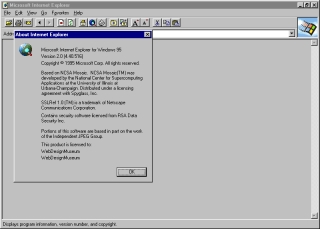
Internet Explorer 2 was released on November 22, 1995. It introduced a slew of new features including Secure Socket Layer (SSL), Virtual Reality Modeling Language (VRML), JavaScript, and support for HTML 3. Additionally, IE2 supported many of the custom features of Netscape Navigator and was even able to import bookmarks directly from it.
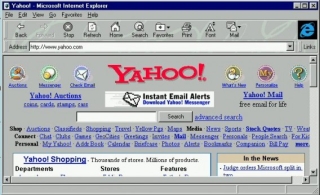
Internet Explorer 3 was released on August 13, 1996 and saw many improvements over earlier versions. IE3 was the first browser to support Cascading Style Sheets (CSS) and included support for ActiveX controls, Java applets, and inline multimedia. IE3 also introduced the iconic, blue "e" logo that continued to be used in Internet Explorer, and later Microsoft Edge, until finally being retired in 2019. IE3 was included with Microsoft Windows 95 OSR2 and as such posed a serious threat to other browsers such as Netscape Navigator *.
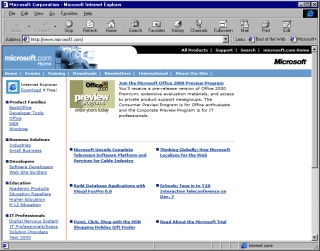
Internet Explorer 4 was released in October 1997. Among other improvements, IE4 introduced Microsoft's new layout engine, Trident, which remained in use as EdgeHTML until it was replaced in 2021 with Blink. IE4 was included with Windows 95 OSR2.5 and Windows 98 (First Edition). IE4 also introduced Active Desktop, which allowed users to display HTML content directly on their desktop. Another feature that was new for IE4 was support for Group Policy, which allowed organizations to configure and lock down specific parts of the browser's configuration.
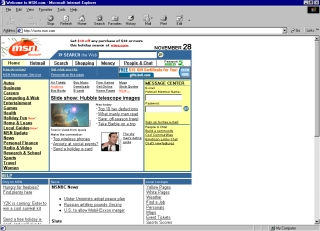
Internet Explorer 5 was the last major version of Internet Explorer for the 90s. It was released on March 18, 1999 and was included with Microsoft Windows 98 SE and Microsoft Windows Me. New features included XML and XSLT support, the ability to save Web pages in MHTML format, and improved support for CSS Level 1 and 2. IE5 also introduced HTML Applications (HTA) and favicon support.
*For more information, see United States of America v. Microsoft Corp.
Return to Browsers | Return to Gallery



Visitors since ID4, 2025
(You didn't really think I'd forget the 90s-style hit counter?)